
Start Your B.Tech in Top Bengaluru Colleges
Top Engineering Colleges in Bengaluru
Discover the pathway to a successful engineering career with our comprehensive guide to Btech admissions leading private colleges in Bengaluru. Join the top Btech branches in top private Engineering colleges in Bengaluru. Call us to get Management quota admission in private Engineering colleges.
Call us on : 971811 1947

B.M.S. College of Engineering, Bengaluru
Direct Admission in B.M.S. College of Engineering Bengaluru
Get direct admission for B.Tech in B.M.S. College of Engineering, Bengaluru. Secure your seat through management quota or entrance exams like KCET and COMEDK. Our experts provide complete support for admission process, counselling, and seat confirmation.
Call us on : 971811 1947
Call Us For Admission
R.V. College of Engineering, Bengaluru
Direct Admission in R.V. College of Engineering
Get direct admission for B.Tech in R.V. College of Engineering (RVCE), Bengaluru. Secure your seat through management quota or entrance exams like KCET and COMEDK. Our experts provide complete admission support to help you join one of the top engineering colleges in Bengaluru.
Call us on : 971811 1947
Call Now for Admission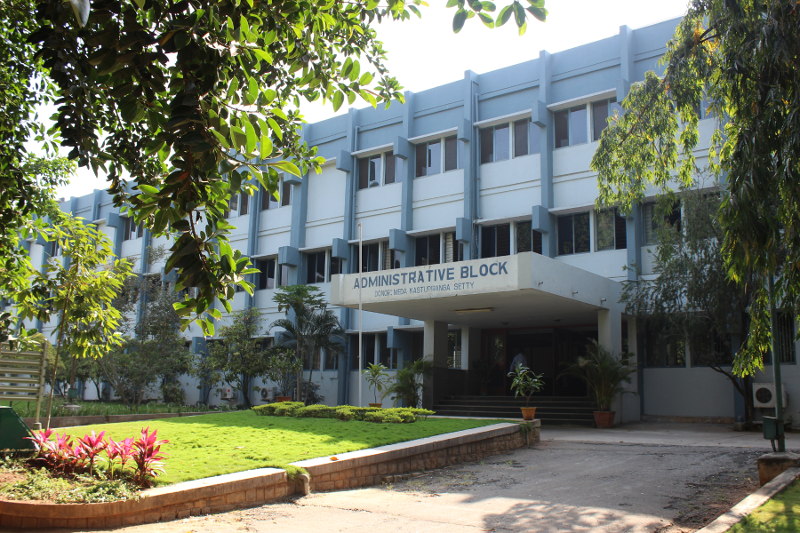
BMSIT College of Engineering, Bengaluru
Direct Admission in BMSIT College
Get direct admission in BMS Institute of Technology and Management (BMSIT&M), Bengaluru for B.Tech programs. Secure your seat through management quota or entrance exams like KCET and COMEDK. We provide complete admission guidance and counselling to help you join one of the top engineering colleges in Bengaluru.
Call us on : 971811 1947
Enquire Now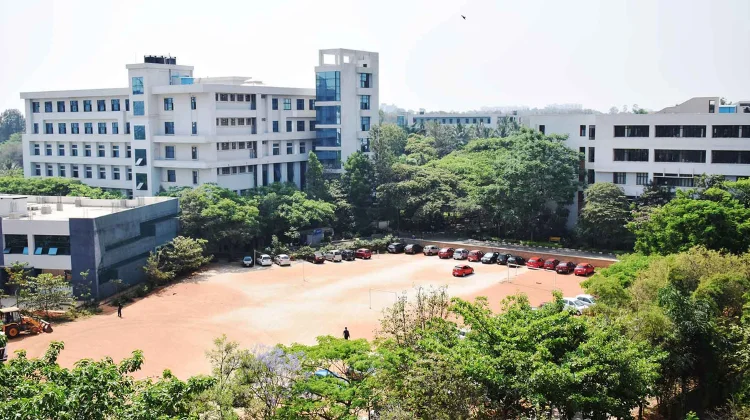
Our Admission Assistance Services
Personalized Counseling
Receive one-on-one guidance tailored to your academic background and career aspirations to help you choose the right college and course.
Application Support
Get expert assistance in filling out applications accurately and meeting all deadlines to enhance your chances of admission.
Entrance Exam Preparation
Access resources and tips to prepare effectively for entrance exams required by top private engineering colleges
B.Tech Admission 2026: Top Private Colleges
Securing a seat in one of the top private engineering colleges is highly competitive. Bangalore, widely known as the “Silicon Valley of India,” is one of the most preferred destinations for engineering aspirants. The city is home to several reputed private engineering institutes that offer high-quality education, modern infrastructure, and excellent placement opportunities.
This guide details the 2026 admission procedure, breaks down the Management and NRI quotas, and ranks the top 10 private engineering colleges based on placement statistics.
Admission Procedure for B.Tech (2026)
B.Tech admissions in Bangalore are conducted through various national and state-level entrance examinations. Most private engineering colleges accept scores from exams such as KCET (Karnataka Common Entrance Test) and COMEDK UGET for undergraduate engineering programs.
In addition to entrance exam-based admissions, some private institutions also offer seats through management quota and NRI quota, allowing eligible students to secure admission directly based on academic qualifications.
Management
Quota &
NRI Quota Admission 2026
For students who miss the high cutoffs in the CAP rounds, private and autonomous colleges offer alternative pathways through the Institutional and Supernumerary quotas.
Institutional Quota (Management Quota)
- Seat Intake: 20% of the total approved seats in private/unaided colleges are reserved under the Institutional Quota.
- How it Works: These seats are filled directly at the institute level. However, it is a myth that these are “direct admissions” without merit. Admissions are strictly based on the Inter-Se Merit of the applicants (using KCET, COMEDK or JEE Main scores) who apply directly to the college.
- Application Process: You must purchase and submit a separate application form directly to the specific college (e.g., BMS or RVITM) when their institute-level rounds are announced after KCET, COMEDK Round 1.
- Fees: Fees for the Institutional Quota are typically the same as the Open Category fees, but students are not eligible for state government scholarships or fee reimbursements.
NRI / OCI / CIWGC Quota
-
Seat Intake: Up to 15% supernumerary (extra) seats are available for Non-Resident Indians (NRI), Overseas Citizens of India (OCI), and Children of Indian Workers in Gulf Countries (CIWGC).
-
Eligibility: Requires specific documentation, including a sponsorship letter from an NRI parent/relative, passport/visa copies, and a foreign bank account letter. A valid entrance score is often not mandatory; 12th-grade board marks (minimum 60%) are usually sufficient.
-
Fees: The fee structure is significantly higher. NRI/OCI students typically pay around $3,000 to $5,000 USD per year, while CIWGC students pay slightly lower fees in INR.
Order-Wise Top Engineering Colleges & Universities
| Rank | College Name | Average Placement | Highest Package |
|---|---|---|---|
| 1 | BMS College of Engineering | ₹14.50 – ₹15.14 LPA | ₹52 LPA |
| 2 | BMS Institute of Technology and Management (BMSITM) | ₹8.07 – ₹10 LPA | ₹46 – ₹55 LPA |
| 3 | R.V. College of Engineering | ₹13 – ₹15 LPA | ₹92 – ₹94 LPA |
| 4 | RV Institute of Technology & Management (RVITM), Bengaluru | ₹11 – ₹12 LPA | ₹25 – ₹29 LPA |
| 5 | MS Ramaiah Institute of Technology | ₹8.50 – ₹9.50 LPA | ₹51 LPA |
| 6 | PES University | ₹10.1 – ₹12 LPA | ₹68 LPA |
Our Guidance Videos
Common Queries About B.Tech Admissions
Explore answers to the most frequently asked questions about Btech admissions private engineering colleges.
What are the eligibility
criteria
for Btech admissions?
To be eligible for Btech admissions, candidates must have completed 10+2 with Physics, Chemistry, and Mathematics, and should have appeared for relevant entrance exams like MHT-CET or JEE Main.
How can I apply for Btech
courses
Applications can be submitted online through the official website of the Directorate of Technical Education, or directly through the college’s admission portal.
What is the admission
process for
private engineering colleges?
The admission process typically involves entrance exam scores, followed by a counseling session where students can select their preferred colleges based on their ranks.
Are there any
scholarships available
for Btech students?
Yes, various scholarships are available based on merit, financial need, and specific categories like minority or reserved categories. Check with individual colleges for specific scholarship opportunities.
What documents are
required during
the admission process?
Students need to submit their 10th and 12th mark sheets, entrance exam scorecards, identity proof, domicile certificate, and passport-sized photographs.
Can I change my branch
after the
first year?
Yes, students may have the option to change their branch after the first year, subject to availability and academic performance. It’s best to consult with the college administration for detailed procedures.